Download from
Play Store

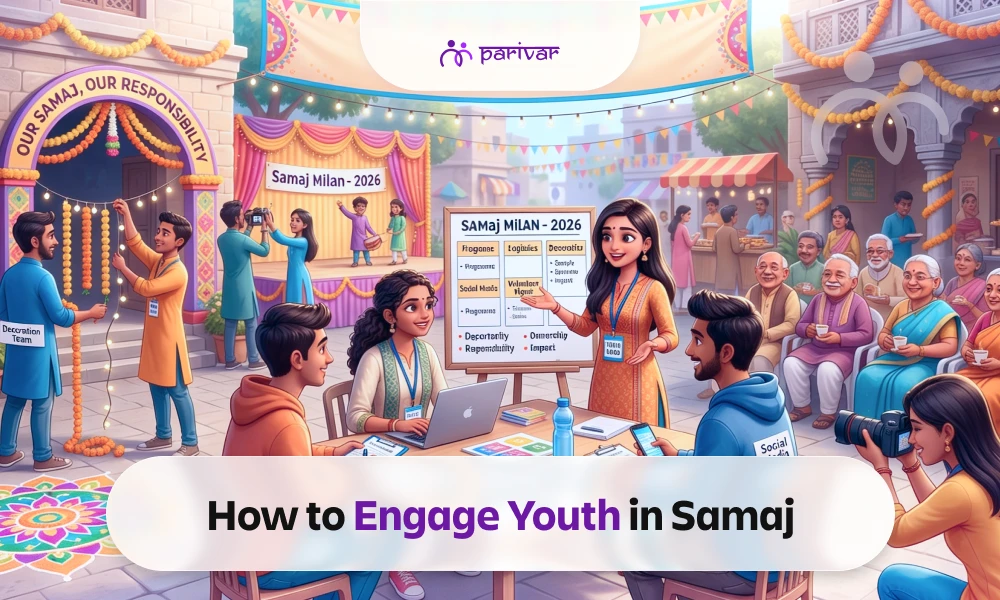
TABLE OF CONTENTS
There’s a quiet but common scene playing out in many Indian households today.
It’s easy to label this as disinterest or worse, disrespect.
But in most cases, it’s neither.
Children and teenagers aren’t disconnected from their samaj because they don’t care. They’re disconnected because they haven’t been shown where they fit.
And that’s a problem communities can solve.
For older generations, connection to the samaj happened naturally.
Today’s younger generation lives in a very different world.
They juggle multiple identities across school, friends, sports, and online communities. The samaj becomes just one of many spaces, often demanding attention without offering relevance.
Learn why community platforms work better than messaging groups for building real engagement.
Connection isn’t about attendance. It’s about identity.
A young person feels connected when they think: “This community is part of who I am.”
That feeling comes from three things:
Not just by family name, but by interests, personality, and individuality.
Not symbolic roles, but real responsibility and ownership like designing the event banner, managing registrations, or hosting a segment of a program.
Seeing their achievements (in studies, sport, arts, or work) valued by the community. A strong sense of belonging in communities starts with feeling genuinely seen.
There’s a big difference between assigning tasks and offering ownership.
Young people don't want to be assigned tasks. They want to be trusted with responsibility.
A teenager who runs the event photography, manages the community's digital album, or anchors a segment of the annual gathering will talk about that experience for years, engage deeply and return willingly. A teenager who helped stack chairs won't come back next time.
Understanding the types of people in a community group can help you identify which young members are ready for leadership roles and which need a gentler entry point.
Stop trying to make adult events “youth-friendly.” Instead, design entirely separate or co-led events that speak to young interests.
These events give youth something to look forward to and encourage organic interaction across generations, without the pressure of formal samaj meetings.
A good community event planning approach makes the difference between events youth attend once and ones they keep coming back to. You can also look at how to organize community activities that are structured enough to run smoothly but flexible enough to feel fun.
Communities often celebrate tradition and elders, but forget to spotlight youth.
Start recognizing their achievements:
How to do it:
Public acknowledgment builds pride and belonging.
Connection deepens when identity becomes personal.
When children understand:
Create a “family tree night” where each child maps their own branch. Tools like the Parivar app make this visual and interactive. Children can tap, explore, and see their name inside the larger community story. Pair this with the Memories feature to attach old photos, stories, and milestones to the family timeline, something children genuinely find fascinating.
Nothing builds loyalty faster than being heard and seeing change happen.
When a teenager sees their idea (e.g., “night cricket match” or “board game evening”) actually happen, they stop being a visitor and become a stakeholder.
A child’s relationship with the samaj often mirrors their parents’.
What you can do at home:
You don't have to manufacture enthusiasm. But being intentional about how you talk about the community at home matters more than most parents realize.
Instead of this |
Try this |
|---|---|
| Forcing attendance without explanation | Explaining why the community matters to them |
| Giving only ceremonial roles (flower greeting, lamp lighting) | Offering real ownership (tech, design, hosting) |
| Criticizing youth for being on their phones | Designing engaging segments that compete for attention |
| Expecting loyalty without listening | Running a single youth poll and acting on it |
Communities that struggle with member engagement often find that youth disengagement is the earliest warning sign and the easiest to address before it spreads to the broader community.
You can’t force connection. But you can make it natural, meaningful, and worth choosing.
The communities that last aren’t the ones that demand participation.
They’re the ones that:
That's how you build community identity that survives not just one generation, but several. And it's what separates a samaj that's thriving from one that's slowly hollowing out. The digital samaj isn't a replacement for physical community, it's the infrastructure that keeps it alive between gatherings, and the space where younger generations already feel at home.
If you’re looking to create a more inclusive, engaging, and structured community experience, tools like the Parivar app can help you:
TABLE OF CONTENTS
ABOUT

Parivar - Bringing all community members together at your fingertips, the community engagement app will let you connect with your community conveniently.
SUBSCRIBE TO OUR NEWSLETTER