Download from
Play Store
TABLE OF CONTENTS
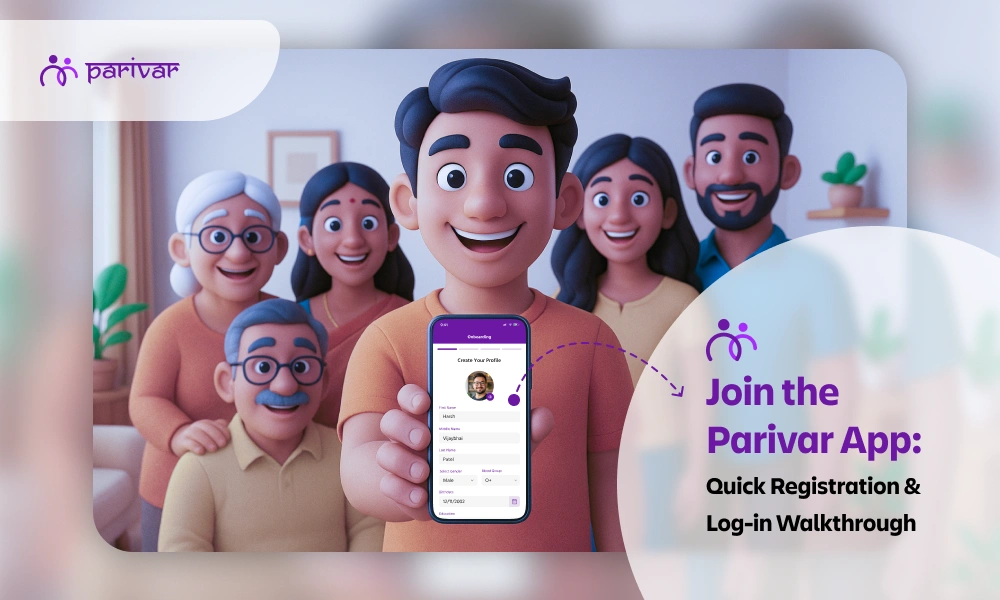
The Parivar Community Management App makes it easier for families and communities to stay organized, connected, and engaged. Whether you want to manage family details, participate in community updates, or stay connected with relatives, the first step is creating your account and setting up your profile.
This guide walks you through each step, from signing up to adding your family members, ensuring a smooth onboarding experience.
To begin your journey, download the Parivar App from the Google Play Store or App Store, and follow the simple onboarding steps.
If you’ve already created an account before, Parivar lets you sign in quickly using two simple methods: Password Login or OTP Login.
This is the traditional and secure way to access your account.
This login method is useful if you prefer not to wait for OTPs every time.
For users who prefer convenience or cannot remember their passwords, Parivar offers login via OTP.
This is helpful for quick access without needing a permanent password.
If you’re new to the Parivar app, the registration process is simple and only takes a minute.
Here’s how to create your account:
After submitting this information, Parivar will send you a confirmation code to verify your identity.
Verification ensures your information stays secure and prevents unauthorized access.
Parivar gives users the option to delete their accounts, but only permanently after a 30-day window. If you attempt to log in during this period:
You can choose:
This ensures users have full control over account restoration during the 30-day grace period.
Once you’re logged in, the next step is to complete your profile. A complete profile helps other members recognize you and allows the app to connect you with your family structure.
You will be asked to fill in:
These details make your profile authentic and useful within the community ecosystem.
One of the core features of Parivar is the ability to digitally map your family tree and stay connected with relatives inside the app.
If you added a wrong person by mistake, or selected the wrong relationship, you can cancel your request and send a correct one anytime.
This feature helps build an accurate family network within the app, making community communication more efficient.
The Parivar Community Management App is designed to simplify how families and communities stay connected. With easy sign-in options, a simple registration process, and powerful family-linking features, anyone can get started in just a few minutes.
Whether you are setting up your profile for the first time or reconnecting after reactivating your account, Parivar ensures a seamless and secure onboarding experience.
TABLE OF CONTENTS
ABOUT

Parivar - Bringing all community members together at your fingertips, the community engagement app will let you connect with your community conveniently.
SUBSCRIBE TO OUR NEWSLETTER
Everyone goes through moments when life feels heavy. Work pressures, personal struggles, uncertainty about the future, or simply the pace of modern life can take a toll on how we feel. During such times, what often helps the most is not advice or solutions, but people - someone who listens, understands, and stands beside us. In moments like these, the presence of a supportive community makes all the difference. It offers more than just interaction. It creates a space where people can share experiences, find encouragement, and feel less alone. Whether it is a neighborhood group, a shared-interest circle, or an online platform, communities have the ability to support emotional well-being in quiet but meaningful ways. Why Mental Well-Being Needs Social Connection Human beings are naturally social. From childhood to adulthood, our sense of comfort and stability is often shaped by the relationships around us. Having a reliable network makes challenges easier to manage. Small gestures often carry more weight than we realize. For example: A simple conversation after a difficult day A message checking in on someone A friend acknowledging how you feel These moments remind people that they are seen and that their emotions matter. Without that connection, even ordinary problems can feel heavier. A stressful day might start to feel like personal failure. A small setback might seem larger than it is simply because there is no one nearby to offer perspective. Communities help fill this gap by providing connection, understanding, and similar experiences. The Comfort of Belonging in a Supportive Community One of the most meaningful things a community offers is the feeling of belonging. Belonging means being accepted as you are, not for the role you play or the image you present, but for who you genuinely are. In a healthy community: Your presence is valued Your voice is heard Your experiences are respected When people feel this kind of acceptance, they are more likely to open up and build genuine relationships. Over time, this sense of belonging in communities creates emotional security. Instead of facing difficulties alone, people know they have others who care. Shared Experiences Create Understanding in a Community Many struggles feel isolating simply because people believe they are the only ones going through them. Communities often change that perception. When someone shares their experience whether it is stress at work, self-doubt after failure, or the loneliness of moving to a new city, it allows others to recognize similar feelings in themselves. For example: A new parent may discover that exhaustion and uncertainty are common experiences. Someone changing careers may find others navigating the same fears. A person recovering from failure may hear stories of resilience from others. These shared experiences create understanding without judgment. People do not always need solutions. Sometimes they simply need to know that someone else truly understands what they are feeling. Support During Difficult Moments Life brings challenges for everyone, including: Personal loss Health concerns Career setbacks Emotional struggles During these times, community support becomes especially valuable. Support can take different forms: Practical help with everyday tasks A thoughtful message checking in Someone willing to listen without offering immediate advice Even small acts of care can have a powerful effect. Knowing that someone notices and genuinely cares can provide comfort during difficult moments. Encouragement That Builds Confidence Communities also help people move forward. When individuals share progress, goals, or personal efforts, encouragement from others can strengthen their confidence. Support from peers often feels meaningful because it comes from people who understand the journey. Communities often support progress by: Celebrating small achievements Encouraging consistency and effort Offering reassurance during setbacks For instance, someone trying to build healthier habits might feel discouraged by slow progress. But when their community recognizes their effort, it can renew motivation. Over time, this support helps people build resilience and self-belief. The Role of Online Communities in Mental Well-Being Communities today are not limited by geography. Community management apps allow people from different places to connect around shared interests, experiences, or values. For many individuals, these communities provide support that may not exist locally. Online communities offer benefits such as: Access to diverse perspectives Easier communication between members Dedicated space for safe discussions Opportunities for members to stay connected even when they are far apart Platforms like the Parivar App make it easier for communities to stay connected in a more organized and meaningful way. However, the strength of any community, online or offline, ultimately comes from the people within it. Respectful communication and responsible community moderation play an important role in keeping these spaces welcoming. What Makes a Community Supportive Not every group automatically becomes a supportive community. Certain qualities help create an environment where people feel comfortable and valued. Respect is essential. When people communicate with kindness and patience, it builds trust among members. Even during disagreements, a respectful tone preserves relationships. Openness also matters. Communities where people feel safe expressing their thoughts tend to develop deeper connections. Participation strengthens the group. When members engage with one another rather than simply observing, relationships grow stronger. Finally, care and empathy help maintain a healthy environment where everyone feels supported. It is also important to recognize that not every group is healthy. Some spaces may feel judgmental or exclusive. Finding the right community sometimes takes time and exploration. Long-Term Benefits of Community Support Belonging to a supportive community can influence mental well-being in lasting ways. People who feel connected to others often experience: Lower levels of stress Greater emotional resilience More confidence in expressing themselves A stronger sense of belonging Most importantly, community support reminds people that they do not have to face life's challenges alone. Why are Communities More Important Than Ever Modern lifestyles sometimes limit opportunities for deeper connection. Busy schedules, digital communication, and changing social patterns can leave people feeling disconnected. Communities help rebuild those connections. They create spaces where people can slow down, speak honestly, and develop relationships based on mutual understanding. In many ways, communities restore something fundamental, the human need to feel connected to others. Supportive Communities Strengthen Mental Health & Well-Being Mental well-being is influenced by many factors, but meaningful relationships remain one of the most powerful sources of support. Supportive communities remind individuals that their struggles are understood and that their presence matters. Through conversations, shared stories, and simple acts of care, communities help people feel supported and emotionally stronger. And sometimes, knowing that someone is there to listen is exactly what makes all the difference.
A group of people does not automatically become a community. What turns a collection of individuals into something meaningful is identity. Community identity is what helps people say, “This is our place” - your family, your close friends, perhaps a religious group or a sports team. There is a shared understanding and a sense of belonging. It gives clarity about why the community exists, what it stands for, and how members are expected to interact with one another. When identity is clear, participation feels natural. When it is unclear, confusion and disengagement slowly follow. We explain what community identity means and how you can build one in a practical and thoughtful way, whether your community meets in person or uses a digital platform like Parivar App to connect members. What is Community Identity? Community identity is the shared understanding of: Why the community exists - its fundamental reason for being What values guide it - the principles that shape decisions How members treat each other - the expected behaviors and interactions What makes it different - its unique character compared to other groups It is not just a logo, a tagline, or a mission statement pinned to a wall. Real identity is reflected in daily actions, decisions, events, conversations, and even how disagreements are handled. Here is a simple test: When someone new joins your community, how long does it take them to understand how things work and what the community believes in? If the answer is "quickly and naturally," that is a sign of strong identity. If new members remain confused for weeks or months, identity needs work. Importance of Having a Community Identity A clear identity helps in many ways: It Creates Belonging: People feel more comfortable when they know what a group stands for. Shared purpose brings people closer. It Reduces Confusion: When values and goals are defined, decisions become easier. Members understand the direction. It Builds Stability: Communities with strong identity do not lose direction easily. Even when leadership changes, the core remains steady. It Encourages Participation: When members feel aligned with the purpose, they are more likely to contribute. Signs Your Community May Lack a Clear Identity How do you know if your community needs to work on identity? Look for these signs: Members often ask, “What exactly are we trying to achieve here?” Events feel disconnected from each other, like isolated activities rather than part of a larger story Conflicts arise repeatedly over basic decisions Participation is low or inconsistent New members struggle to understand how things work Long-time members describe the community differently, suggesting no shared understanding exists Decisions feel arbitrary because no clear principles guide them These are not failures. They are indicators that clarity is needed. The good news is that identity can be built intentionally, even in established communities that have drifted. Core Elements of a Strong Community Identity Building identity does not require complicated planning or expensive consultants. It requires clarity about a few fundamental elements and consistency in applying them. 1. A Clear Purpose Ask simple questions: Why was this community formed? What problem does it solve? What value does it bring to members? The purpose should be short and easy to understand. If it takes too long to explain, it may need refining. Weak: "We want to grow together." Strong: "Connecting first-generation immigrant parents to share resources, advice, and friendship." 2. Shared Values Values guide behavior. They influence how members interact and how decisions are made. For example: Respect in discussions Transparency in financial matters Equal participation Accountability in responsibilities Values should not remain written statements. They should be visible in everyday actions. 3. A Defined Culture Every community has a culture, whether planned or not. Consider: Are meetings formal or relaxed? Is communication structured or open? Are traditions important? There is no right or wrong style. What matters is consistency. 4. Visual and Communication Style While identity is deeper than visuals, presentation still matters. A consistent logo or symbol Clear communication tone Organized announcements This helps members feel that the community is structured and dependable. 5. Traditions and Shared Moments Annual events, celebrations, volunteer drives, or recognition ceremonies help strengthen identity. Over time, these moments become part of the community’s story. Step-by-Step Guide to Building a Strong Community Identity Here is a simple approach that any community can follow. Step 1: Define the Purpose Clearly Gather core members or leaders and discuss: What are we trying to build? What do members expect from us? What do we want to achieve in the next few years? Write it down in simple language. Avoid complicated statements. Step 2: Involve Members in the Process Identity should not be decided by a small group alone. You can: Conduct short surveys Organize open discussions Invite suggestions When members contribute, they feel ownership. Step 3: Document and Share It Once purpose and values are clear: Publish a short mission statement Share community guidelines Create a welcome note for new members This ensures everyone receives the same message. Step 4: Align Actions with Identity If transparency is a value, share updates regularly. If inclusiveness is important, make sure everyone gets equal opportunity to participate. Identity must match behavior. Otherwise, it loses meaning. Step 5: Reinforce It Regularly Identity should not be mentioned once and forgotten. Repeat the purpose during meetings Highlight member contributions Celebrate achievements Share stories that reflect your values Repetition strengthens clarity. Role of Leadership in Shaping Community Identity Leaders play a central role in shaping and maintaining identity. Members observe leadership closely. If leaders: Model values consistently Communicate purpose regularly Make decisions aligned with identity Address misalignment quickly The culture becomes stronger. If leaders act differently from stated values, identity weakens quickly. Leadership consistency matters more than speeches. Common Mistakes to Avoid Being Too Generic: "Building a better community" is too broad. Be specific. Copying Other Communities: Adapt ideas to your context. Identity must feel authentic. Ignoring Feedback: If members feel unheard, they disconnect. Changing Direction Too Often: Frequent shifts create uncertainty. Stability builds confidence. How Community Identity Grows Over Time Identity is not built in one meeting. It develops through repeated actions. Over time, members begin to say: “This is how we do things here.” “This is what we stand for.” That is when identity becomes strong. It shows participation, cooperation, and mutual respect. Measuring the Strength of Your Community Identity You can observe: Member retention Event participation Volunteer involvement Constructive discussions Feedback tone New member experience If members speak positively about the community, participate regularly and invite others to join, identity is working. Making Your Community Identity Stronger A strong community identity does not require complex systems. It requires clarity, consistency, regular communication, leadership and involvement. When members understand the purpose, share common values, and see those values reflected in action, they feel connected. And when people feel connected, communities become stronger, not just in numbers, but in relationships. Building identity takes time. But once established, it becomes the foundation on which everything else grows. To experience these benefits firsthand, you can download the Parivar app on iOS or Android and start building a stronger, more connected community today.
Trust is the invisible glue that holds every successful community together. Whether it's a local housing society, a cultural group, a religious association, or a professional network, trust determines participation, loyalty, and long-term sustainability. Without trust, members disengage. With trust, communities succeed. In this blog, we’ll explore why trust is important, what breaks it, and practical steps to build and maintain it in any community, whether you manage it offline or through a community management app like Parivar. Why Trust is the Backbone of Every Community Communities are built on relationships. And relationships are built on trust. When members trust leadership and each other: They participate more actively They volunteer willingly They communicate openly They stay longer They recommend the community to others Trust reduces friction. It prevents misunderstandings from escalating and creates psychological safety, a space where people feel comfortable expressing themselves. What Breaks Trust in Communities? Before building trust, it’s important to understand what weakens it. Lack of Transparency: When decisions are made behind closed doors, members feel excluded. Inconsistent Communication: Irregular updates create confusion and rumors. Favoritism or Bias: Perceived unfairness damages credibility quickly. Unresolved Conflicts: Ignoring disputes allows resentment to grow. Broken Promises: Failing to deliver on commitments erodes confidence over time. Recognizing these issues early helps leaders course-correct before damage becomes long-term. 10 Practical Ways to Build Trust in Your Community 1. Communicate Clearly and Consistently Share updates regularly even when there’s “nothing big” to announce. Consistency builds reliability. Monthly updates Event summaries Financial transparency reports Meeting minutes People trust what they understand. 2. Be Transparent in Decision-Making Explain: Why decisions were made Who was involved What alternatives were considered When members understand the reasoning, they’re more likely to support outcomes even if they disagree. 3. Encourage Open Feedback Create safe channels for: Suggestions Complaints Anonymous feedback Healthy discussions And most importantly → respond to it. Acknowledging feedback (even when you can’t implement it) builds credibility. 4. Deliver on Small Promises First Trust is built gradually. If you promise: An event at a specific date A document by a deadline A response within 24 hours Deliver it. Consistency in small commitments builds confidence in larger ones. 5. Treat Everyone Fairly Apply rules equally across all members. When exceptions are necessary, clearly explain why. Perceived fairness is one of the strongest drivers of community trust. 6. Resolve Conflicts Quickly and Calmly Conflict isn’t the problem, unresolved conflict is. Steps: Listen to all sides Stay neutral Focus on solutions, not blame Communicate outcomes transparently Communities that handle disputes maturely earn respect. 7. Share Financial Transparency (If Applicable) For communities handling funds: Share income & expenses Publish simple reports Provide clarity on how money is used Financial clarity significantly strengthens trust. 8. Recognize and Appreciate Members Acknowledgment builds emotional connection. Celebrate volunteer contributions Highlight member achievements Appreciate consistent participation When people feel valued, they feel invested. 9. Create Shared Goals Trust grows when members feel united by purpose. Define: What the community stands for What it wants to achieve this year How members can contribute Shared vision strengthens unity. 10. Lead by Example Leaders set the tone. If leaders: Show integrity Admit mistakes Stay approachable Follow rules themselves Members will mirror that behavior. The Psychology Behind Trust in Communities People join communities for belonging. But they stay because of emotional safety. Research in social psychology shows that trust increases: Cooperation Information sharing Group performance Member retention When members believe others have good intentions, collaboration becomes natural. Signs Your Community is Building Strong Trust You’ll notice: More voluntary participation Honest conversations Constructive disagreement Lower conflict intensity Higher member retention Trust doesn’t eliminate challenges, it makes them manageable. Common Mistakes Community Leaders Should Avoid Overpromising and underdelivering Ignoring small complaints Being defensive about feedback Delaying communication during crisis Making decisions without consultation Remember: trust is slow to build, but quick to lose. Building Trust Within Community is a Long-Term Investment Building trust in your community isn’t a one-time effort, it’s an ongoing process. It requires consistency, empathy, fairness, and transparency. Communities that prioritize trust experience: Increased member engagement Stronger member loyalty Better collaboration Sustainable growth If you focus on trust first, everything else including participation, growth, and impact follows naturally.