Parivar-bg-design
online family support platform

Building a Family Support System Online: Healthy or Harmful?

  • Kanishka Panchal

  • November 12, 2025 6 min read

TABLE OF CONTENTS

    • The Good Side: When Online Support Helps
    • The Other Side: When It Becomes Too Much
    • 📲Download the Parivar App

Introduction

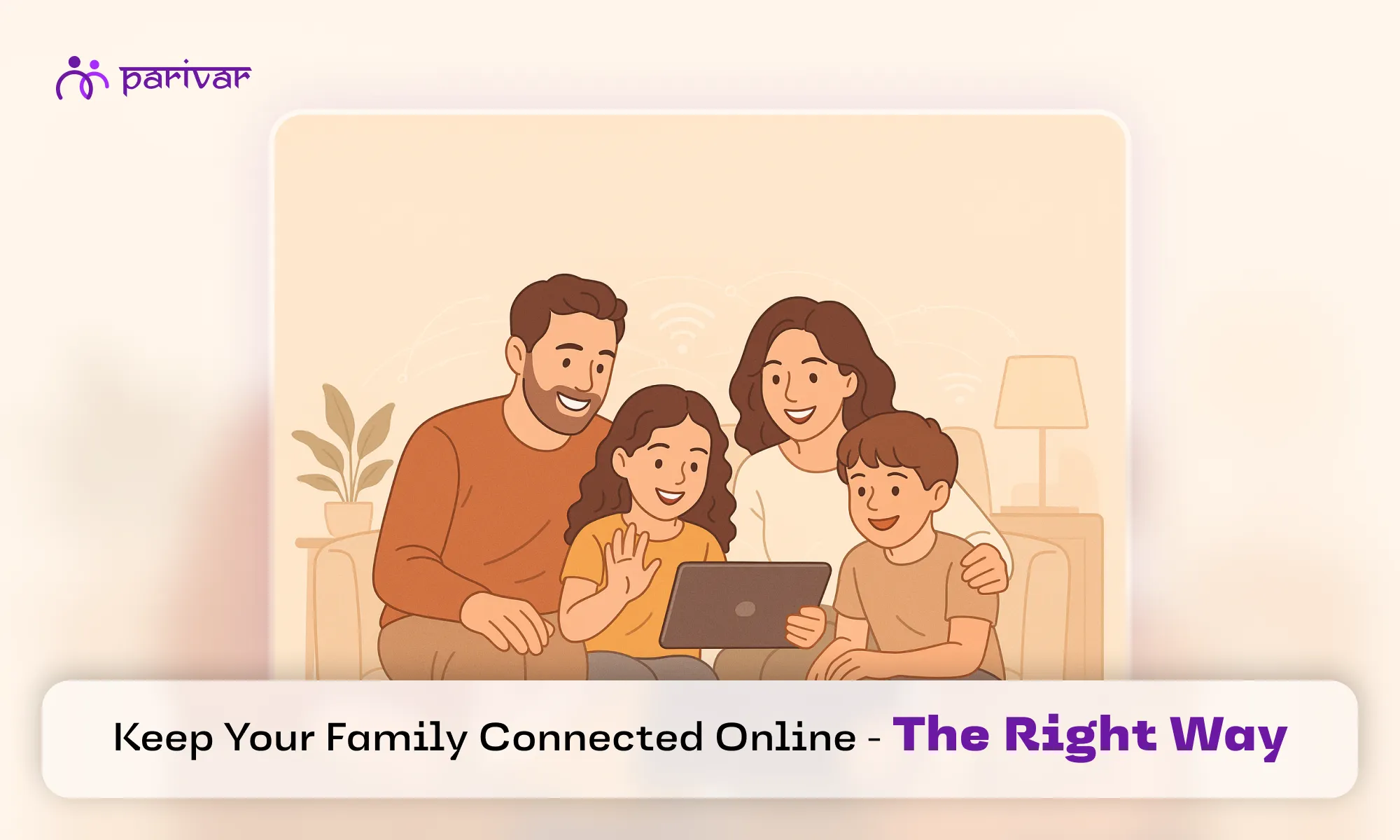
Family life has moved online…

Most families today stay connected through screens. We share photos, celebrate birthdays, and check in on each other, all through messages or video calls.

It’s wonderful that technology helps us stay close, especially when we live apart.

But at the same time, it raises a question: Are online family connections making us stronger, or are we slowly losing touch with real moments?

How Families Used to Stay Connected Before Digitalization

Not long ago, family support meant being together in person, evening chats, meals, or simply showing up when someone needed help.

As families have become more spread out and busy, that’s become harder.

Now, most of our communication happens on screens like social app groups, video calls, or shared photos.

It’s not bad, it’s just different.

The digital world has become the new living room for many families.

The Ups and Downs of Staying Connected Online

Our screens help us share love, laughter, and support every day. But they can also blur the line between real and virtual connection. The key is knowing where to draw that line.

The Good Side: When Online Support Helps

Online spaces can make family life easier in many ways.

  • Staying close across distances: Whether parents live in another city or children study abroad, apps make daily connection simple.
  • Quick emotional check-ins: A message saying “reached home safely” or “good luck for your exam” keeps bonds alive.
  • Coordinating family matters: Planning weddings, managing health updates, or making joint decisions through polls and discussions, everything can happen smoothly through one shared space.
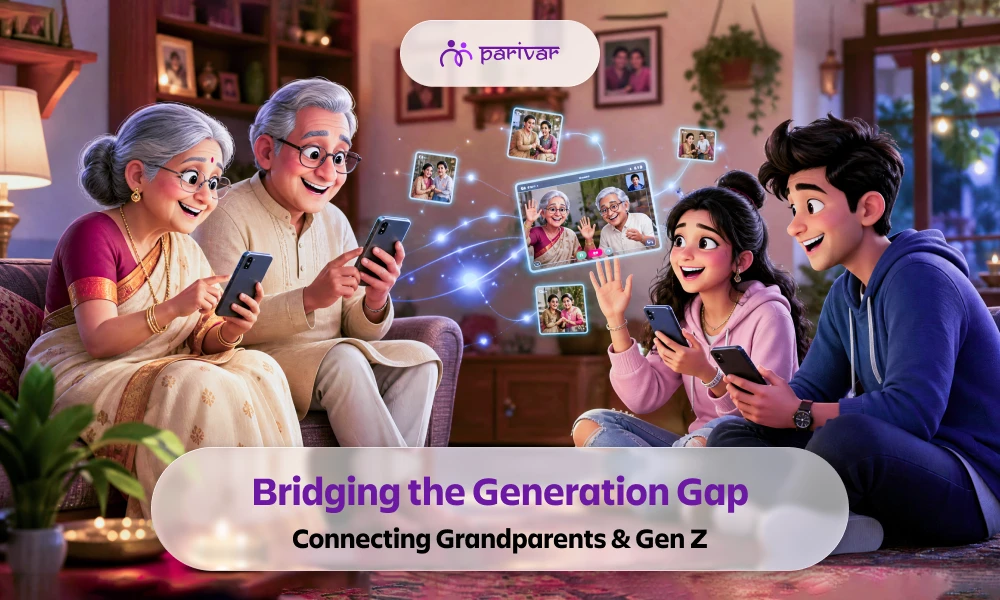
  • Including everyone: With photos and video calls, elderly members feel connected and included, even when they can’t travel.

Used with care, technology can bring warmth and support to everyday life.

The Other Side: When It Becomes Too Much

But like most things, too much of it can have side effects.

  • Less face-to-face time: Sometimes, we talk more on screens than at the dinner table.
  • Misunderstandings: Texts don’t always carry tone or emotion, leading to confusion.
  • Privacy concerns: It’s easy to overshare personal moments without realizing it.
  • Not real closeness: We can feel connected online but still lonely in real life.

The key is not to avoid technology, but to use it mindfully.

Finding the Right Balance Between Online and Offline Connection

Building a healthy online family system doesn’t mean being available all the time. It means choosing the right moments to connect and keeping them meaningful.

Here are a few simple ways:

  • Create offline moments: Put phones aside during meals or weekends.
  • Be thoughtful in messages: Use voice notes or video calls to add warmth.
  • Respect privacy: Ask before sharing someone’s photo or message in a group.
  • Focus on real support: Use technology to care, not to control.

When we combine digital tools with real-world care, family bonds grow stronger.

How Parivar App Helps Families Stay Close

This is exactly where the Parivar App makes a difference.

Parivar is built for families who want to stay connected without the noise of social media. It gives you a private and secure space to:

Unlike big social platforms, Parivar is designed to bring families closer in a safe, peaceful way. It helps you create a digital circle that feels personal and real, just like your family.

📲Download the Parivar App

Available on both iOS and Android, so every family member can join in easily.

Technology and Togetherness Can Work Together

Technology isn’t replacing real relationships, it’s reshaping how we maintain them.

When used thoughtfully, online family spaces can strengthen love, trust, and understanding.

Building a family support system online can be healthy as long as we stay human at the heart of it.

After all, connection isn’t about being online all the time, it’s about being there when it matters most.


TABLE OF CONTENTS

    • The Good Side: When Online Support Helps
    • The Other Side: When It Becomes Too Much
    • 📲Download the Parivar App

ABOUT

Parivar - Bringing all community members together at your fingertips, the community engagement app will let you connect with your community conveniently.

Frequently Asked Questions

What is an online family support system and how does it work?

An online family support system is a private digital space where families can stay connected, share updates, plan events, and support one another. With apps like Parivar, families can manage communication, celebrations, and coordination.

Technology helps families stay close, especially when living apart. Through video calls, group chats, and apps like Parivar, it’s easier to share moments and stay involved in each other’s lives. The key is to use technology mindfully to keep connections real.

Online family support systems make communication and coordination simple, but they can also lead to over-dependence on screens if not balanced. Use tools that are designed to encourage connection without replacing in-person moments.

Finding balance means using technology to connect, not to replace real family time. Setting phone-free moments, using apps for meaningful updates, and focusing on shared experiences can help.

Parivar App offers a private, secure, and ad-free space for families to share, plan, and stay connected. Unlike social media, it’s built around real relationships, helping families find the right balance between digital connection and real-world togetherness.

Recent Blogs

View all
how-to-engage-youth-in-samaj-community

How to Keep Children and Teenagers Connected to Their Samaj

There’s a quiet but common scene playing out in many Indian households today. A parent wonders why their child avoids the annual samaj milan. A teenager scrolls through their phone during community meetings. A younger child struggles to recognize relatives they’ve met multiple times. It’s easy to label this as disinterest or worse, disrespect. But in most cases, it’s neither. Children and teenagers aren’t disconnected from their samaj because they don’t care. They’re disconnected because they haven’t been shown where they fit. And that’s a problem communities can solve. Why Young Generations Are Drifting Away from the Samaj For older generations, connection to the samaj happened naturally. You grew up around it. Your parents were involved. Events felt social, not obligatory. Today’s younger generation lives in a very different world. They juggle multiple identities across school, friends, sports, and online communities. The samaj becomes just one of many spaces, often demanding attention without offering relevance. What’s Causing the Disconnect? They’re observers, not participants: Events are planned for them, not with them. Content doesn’t resonate: Committee discussions and financial updates don’t engage a 14-year-old. They’re rarely asked what they want: Assumptions replace actual conversations. There’s no digital presence: If the samaj lives only in WhatsApp groups and annual events, it misses where youth actually are. Learn why community platforms work better than messaging groups for building real engagement. What True Connection with the Samaj Looks Like Connection isn’t about attendance. It’s about identity. A young person feels connected when they think: “This community is part of who I am.” That feeling comes from three things: 1. Being Known Not just by family name, but by interests, personality, and individuality. 2. Being Useful Not symbolic roles, but real responsibility and ownership like designing the event banner, managing registrations, or hosting a segment of a program. 3. Being Proud Seeing their achievements (in studies, sport, arts, or work) valued by the community. A strong sense of belonging in communities starts with feeling genuinely seen. How to Reconnect Youth with the Samaj (Practical Steps That Work) 1. Give Real Responsibility  There’s a big difference between assigning tasks and offering ownership. Young people don't want to be assigned tasks. They want to be trusted with responsibility. ❌ “Help arrange chairs.” âś… “Manage social media coverage for the event.” A teenager who runs the event photography, manages the community's digital album, or anchors a segment of the annual gathering will talk about that experience for years, engage deeply and return willingly. A teenager who helped stack chairs won't come back next time. Understanding the types of people in a community group can help you identify which young members are ready for leadership roles and which need a gentler entry point. 2. Create Youth-Driven Events Stop trying to make adult events “youth-friendly.” Instead, design entirely separate or co-led events that speak to young interests. Career talks by young professionals from the samaj (engineers, designers, business owners) Sports days or gaming tournaments (evenings work best) Talent showcases (music, dance, stand-up, public speaking) Startup or idea pitch sessions (judged by community elders for fun) These events give youth something to look forward to and encourage organic interaction across generations, without the pressure of formal samaj meetings. A good community event planning approach makes the difference between events youth attend once and ones they keep coming back to. You can also look at how to organize community activities that are structured enough to run smoothly but flexible enough to feel fun. 3. Celebrate Their Achievements Communities often celebrate tradition and elders, but forget to spotlight youth. Start recognizing their achievements: Academic results College admissions Sports wins Creative achievements How to do it: A 5-minute youth achievement segment during samaj events A monthly broadcast or Instagram story featuring one young person A physical or digital “wall of fame” Public acknowledgment builds pride and belonging. 4. Turn Family History into a Living Experience Connection deepens when identity becomes personal. When children understand: Where their family comes from How they’re connected to others Their place in the larger story Create a “family tree night” where each child maps their own branch. Tools like the Parivar app make this visual and interactive. Children can tap, explore, and see their name inside the larger community story. Pair this with the Memories feature to attach old photos, stories, and milestones to the family timeline, something children genuinely find fascinating. 5. Ask and Act on Their Input Nothing builds loyalty faster than being heard and seeing change happen. Run a poll after every event (Google Forms or Polls on Parivar) Have one real 15-minute conversation with a small youth group before planning next year’s calendar Implement at least one youth-suggested idea every year and publicly thank them for it When a teenager sees their idea (e.g., “night cricket match” or “board game evening”) actually happen, they stop being a visitor and become a stakeholder. For Parents: Your Attitude Shapes Their Connection A child’s relationship with the samaj often mirrors their parents’. If parents treat community involvement as a burden, children absorb that attitude. If parents speak positively about it, share stories and connections, and show genuine interest, children arrive curious, not resistant. What you can do at home: Talk about one positive samaj memory at dinner (“I saw Uncle Raj help someone today”) Avoid complaining about committee politics in front of children Ask your child: “What would make samaj events fun for you?” You don't have to manufacture enthusiasm. But being intentional about how you talk about the community at home matters more than most parents realize. What Not to Do (Common Mistakes That Backfire) table { font-family: hindivadodara, sans-serif; border-collapse: collapse; width: 100%; } td, th { border: 1px solid #dddddd; text-align: left; padding: 8px; } Instead of this Try this Forcing attendance without explanation Explaining why the community matters to them Giving only ceremonial roles (flower greeting, lamp lighting) Offering real ownership (tech, design, hosting) Criticizing youth for being on their phones Designing engaging segments that compete for attention Expecting loyalty without listening Running a single youth poll and acting on it Communities that struggle with member engagement often find that youth disengagement is the earliest warning sign and the easiest to address before it spreads to the broader community. Building a Samaj That Lasts for Generations You can’t force connection. But you can make it natural, meaningful, and worth choosing. The communities that last aren’t the ones that demand participation. They’re the ones that: Notice young members Give them real roles Make them feel they belong early on That's how you build community identity that survives not just one generation, but several. And it's what separates a samaj that's thriving from one that's slowly hollowing out. The digital samaj isn't a replacement for physical community, it's the infrastructure that keeps it alive between gatherings, and the space where younger generations already feel at home. Create a Samaj Where Every Generation Feels They Belong If you’re looking to create a more inclusive, engaging, and structured community experience, tools like the Parivar app can help you: Manage events with youth-friendly interfaces Highlight achievements publicly Build family trees that children can explore Engage members digitally where they already spend time Available on Android and iOS

  • Kanishka Panchal
trustworthy-community-app

What Makes a Community App Trustworthy?

When you join a community app, you're not just downloading software. You're trusting it with your family's details, your neighbours' contact numbers, your children's photos, and sometimes even your home address. That's a lot to hand over to an app you found online. Yet most people don't think twice before signing up. They assume the app is safe, well-intentioned, and the data is private. Sometimes that's true. Sometimes it isn't. So what actually makes a community app trustworthy? Here are the things worth checking before you bring your entire community onto any platform. Key Factors That Define a Trustworthy Community App Before you trust a platform with your community's data and interactions, evaluate these essentials closely. 1. Clear About Data Collection Trustworthy apps don’t hide anything. They clearly tell you: What data is being collected Why it’s being collected Where it’s stored Who can access it This transparency should be visible before you dig into a long privacy policy. Watch for these red flag phrases: "Data may be shared with partners" (Who are they?) "We may update this policy at any time" (No notice?) "Limited third-party access" (Limited by what?) If the language feels confusing or intentionally vague, treat it as a warning sign. The best platforms follow a simple principle: Collect only what's necessary and nothing more. // Read more: The Importance of Privacy and Security in Community Apps 2. Your Data Isn’t the Product Free apps often monetize through ads or by selling user data. That trade-off might be acceptable on large social media platforms. It’s far more concerning in a community setting. Community apps often hold: Residential addresses Event details Internal conversations Family photos This isn’t data that should feed advertising algorithms or be shared with third parties. Before committing, ask: Does the app show ads? Does it mention advertiser partnerships? Can you pay for an ad-free, privacy-protected version? If the answer is yes, think carefully about what you’re sharing and who ultimately benefits. This is one of the key reasons Parivar is built differently from social media apps. 3. Admins Have Real Control (Not Just a Title) A safe community needs empowered administrators. That means: Invite-only access Role-based permissions Ability to remove members Control over who sees what Tools to manage and delete content Two-factor authentication for admin accounts Without these, admins are symbolic, not functional. Trustworthy platforms also make roles transparent. Members should always know: Who manages the community Who has access to their data There should be no hidden roles or invisible oversight. 4. Moderation Is Structured, Not Reactive Even the most well-intentioned communities face issues. What matters is how they’re handled. A reliable community app provides: Reporting and flagging tools Clear moderation workflows Fast response mechanisms (e.g., a post is hidden after 3 member reports, not after a week of email back-and-forth) It shouldn’t rely entirely on members to resolve conflicts. And it shouldn’t centralize all power with an invisible support team either. The balance is key: community-led moderation, backed by platform support when needed. 5. Membership is Controlled, Not Discoverable by Strangers On most social media platforms, communities are semi-public by default. A trustworthy community app prioritizes controlled access: Invite-only entry Approval-based onboarding Verification where necessary There should never be a scenario where someone joins simply by searching the right keyword. This is especially critical for: Family groups Residential communities Groups with elderly members or children Safe spaces for community discussions start with controlling who gets in the door. 6. You Can Leave as Easily as You Joined A trustworthy app doesn't trap you. Before signing up, check: Is there a clear Delete Account option? Does deleting your account erase all your data from their servers? Can you export your data (messages, photos, contacts) before leaving? If leaving feels harder than joining, that's a red flag. 7. Security Basics Aren't Optional Trust requires more than promises. Look for these non-negotiable features: table { font-family: hindivadodara, sans-serif; border-collapse: collapse; width: 100%; } td, th { border: 1px solid #dddddd; text-align: left; padding: 8px; } Feature Importance End-to-end encryption Only members can read messages, not the platform, not hackers Two-factor authentication (2FA) Prevents account takeover even if passwords leak Regular security audits Third-party verification of safety claims Data backup with user control Prevents loss during updates or outages If an app doesn't offer these or won't confirm them publicly, proceed with extreme caution. 8. Reliability Builds Confidence Over Time Trust isn’t just about security, it’s about consistency. An app that: Crashes during important events Loses data after updates Changes features without warning …quickly loses credibility. A dependable platform: Works consistently Communicates updates clearly Offers responsive support People won’t share important information on a platform they can’t rely on. 9. The People Behind the App Are Visible Would you trust a service without knowing who runs it? Yet many communities do exactly that with apps. A trustworthy platform is backed by: A clearly identifiable company Public contact details Transparent communication channels For communities in India, there’s an added layer: data jurisdiction. If data is stored overseas, it may fall under different legal frameworks, making accountability harder. Choosing a platform that stores data locally gives communities an additional layer of legal protection and clarity under Indian law. This matters especially for NRI families staying connected across borders. 10. Real Communities Use It and Stay Trust leaves a trail. Look for: Active communities Long-term usage Independent reviews (not just testimonials on the app's own website) Pro tip: Ask existing community admins directly, "How long have you used this? What's gone wrong? How did the support handle it?" An app people abandon quickly is a signal worth paying attention to. Platforms where communities grow and stay indicate reliability and trust earned over time. See why families choose Parivar and what the best community app features actually look like in practice. Community Trust is Earned, Not Claimed No feature list or marketing campaign can replace consistent, honest behavior. The most successful community platforms: Respect user privacy Empower administrators Operate transparently Deliver reliability over time Let you leave with your data intact Parivar App is built with these trust principles at its core.  Before choosing a platform, take a step back and ask the right questions. Because ultimately, the real question is: Does this app see your community as people to serve or data to leverage? The answer will tell you everything that matters.

  • Kanishka Panchal
offline-meetups-in-digital-communities

The Importance of Offline Meetups in Digital Communities

Your community might have 500 members. But how many would you recognize in a room? We live in an age where a family spread across five cities can share a photo within seconds, where a community of a thousand members can vote on a decision in minutes, and where a samaj's announcements reach everyone before the chai gets cold. Digital tools have genuinely transformed how Indian families and communities stay connected. And yet, something still feels missing. You’ve probably noticed it: A group that’s active all year, but feels distant at the annual gathering Hundreds of members, but only a few real connections Plenty of “seen” ticks, but very few meaningful conversations The truth is, no matter how good the technology gets, digital connection has a ceiling.  → And the only thing that breaks through it is getting people in the same room. What Offline Meetups Actually Do When people meet face-to-face, something shifts that no app can replicate. A message can be misread. A shared meal? Never. A poll tells you what people think. A conversation tells you who they are. The elder who only ever posts "nice photo 👍" in the group turns out to be a brilliant storyteller. The quiet member turns out to run a successful business. The couple you've only seen in profile pictures becomes real, complete with stories, laughter, and shared moments. Offline meetups: Build trust faster than any digital interaction Create lasting memories that keep the community album alive Put real faces to the names in your member directory And once that happens, everything online becomes warmer, more human, and more meaningful. The Gap Between Online Engagement and Real Bonds Most communities follow a pattern: 10–15% are highly active 20% engage occasionally The majority stays silent But silence doesn’t mean disinterest. It often means people haven’t found their moment to belong and participate yet. Offline meetups create that moment. After attending even one good event: People participate more Conversations feel natural Engagement increases genuinely 👉 One well-planned meetup can do more than months of digital activity. It creates a sense of belonging that sticks. Types of Meetups That Work for Indian Families and Communities No single format fits every community. The best meetups match your culture and interests. Here are a few that tend to resonate: 1. Samaj Milans and Annual Gatherings The backbone of most community organizations. These larger gatherings bring everyone together, give the committee visibility, and create a shared sense of community identity. 2. City-Based Local Meetups Not everyone can travel far. Organizing smaller, city-level gatherings makes participation easier and helps build local bonds within a larger community. 3. Festive Celebrations Festivals like Navratri, Diwali, Uttarayan, and Holi are a natural reason to gather. They carry emotional weight and rarely need much convincing to attend. If your community also celebrates traditions digitally, a physical gathering brings those digital moments full circle. 4. Business and Professional Networking Many community members are entrepreneurs, professionals, or job seekers. A dedicated networking event within the community builds trust that no LinkedIn connection can replicate. You can make it even more effective by pairing it with your community's business directory and job board. 5. Youth Events Career talks, sports days, skill-sharing sessions. When young members feel the community is invested in them, they become its most energetic contributors. These events also give young people a space to share their achievements with the wider community in a meaningful way. 6. Matrimonial Meet-and-Greets A thoughtful, structured event for families exploring matches within the community. Far warmer than scrolling through profiles alone. How Parivar Helps You Plan It All The real power comes when digital tools and offline events work together.  Parivar bridges this gap. Here's how the app supports every stage of your meetup: Before the Event Create and publish events with full details - date, time, venue, agenda Run a poll to decide the best date or location democratically, people attend what they helped create. Assign responsibilities with the Committee feature. Who's handling food, who's managing registration, who's coordinating transport. Learn more about the role of committees in community building. Schedule coordination calls using the Meetings feature. During Promotion Send digital invitations directly through the app Use the Member Directory for city-based planning Keep momentum with timely reminders through Notifications After the Event Upload photos to shared albums Collect feedback Keep the momentum alive for the next meetup through discussions The energy from a good meetup doesn't have to fade, it can flow right back into your digital community. How to Plan a Successful Community Meetup (Even If You're Busy) Let's address the #1 fear: "This sounds great, but planning feels like too much work." Truth be told: You don't need a large budget or months of planning. You need a few good decisions made early. For a detailed walkthrough, our guide on stress-free event planning for families and communities covers the full process. Start small: 30 engaged people > 300 uninterested ones. Begin with your most active members and grow from there. Use polls early: People attend what they help create. Assign clear roles: Even a 3-person team with clear responsibilities can run a great event. Promote consistently: One message isn’t enough, build anticipation through chats, discussions, event reminders. Capture the memories: Share photos within 24–48 hours to sustain energy. Tag achievements, share highlights, and publicly appreciate volunteers. And here's a secret: Maybe only 8 people show up to the first city meetup. That's perfectly fine. Those 8 become your core team for the next one, where 30 will come. Every strong community started small. What Changes After One Meetup The impact of a good offline gathering goes beyond the event itself: Online conversations become warmer Misunderstandings reduce Conflicts get resolved that might otherwise brew silently Business and job opportunities emerge Matrimonial connections happen naturally Elders feel valued Youth feel included Most importantly: Trust gets built and it lasts. Communities that meet, even once a year, are far more resilient than those that stay purely digital. This holds true whether you're managing a large samaj, a neighbourhood community, or a small, close-knit group. A Digital Home with a Real-World Heartbeat Strong communities have always known this: Connection isn’t just about information. It’s about presence. Digital tools like Parivar help you stay organized, connected, and engaged across distances. But the communities that truly thrive are the ones that use them to come together in real life. Your next community meetup could be the thing that transforms a group of members into a true parivar. Download Parivar and start planning your community's next gathering, from invitations to albums, all in one place. Available on Android and iOS Have you organized a community meetup using Parivar? Share your experience with us, we'd love to hear how it went.

  • Kanishka Panchal