Parivar-bg-design
How to Stay Connected with Extended Family

How to Stay Connected with Extended Family & Manage Communication

  • Kanishka Panchal

  • November 26, 2025 8 min read

TABLE OF CONTENTS

    • 1. Different Age Groups
    • 2. Too Many Chat Groups
    • 3. Unclear Responsibilities
    • 4. Private Conversations Mixed with Public Ones
    • 5. Information gets Diluted
    • 1. Family Groups & Sub-Groups
    • 2. Events & Activities
    • 3. Shared Responsibilities
    • 4. Privacy Controls

Introduction

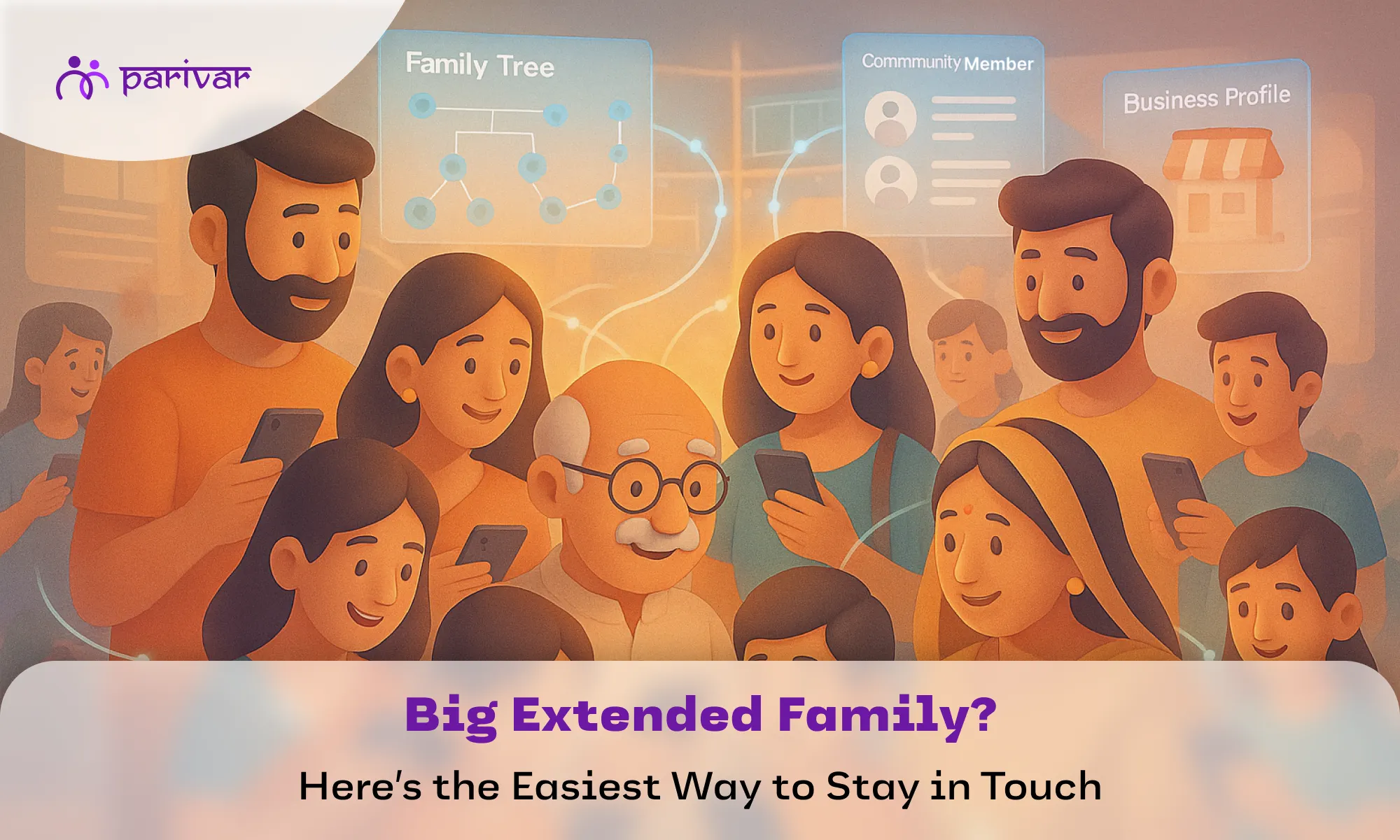
Staying connected in a large or joint family may seem simple from the outside. There are many people, close relationships, and plenty of reasons to talk every day. But in reality, keeping everyone updated and managing communication across a big family becomes complicated very quickly. Messages get missed, different versions of the same information start circulating, and even small decisions turn into long conversations. Someone says they didn’t know about a plan, someone else feels left out, and the same pattern continues.

Most families experience this. And as families grow, the need for a clear and simple way to stay connected becomes even more important.

Why Staying Connected Becomes Difficult in Large Families

In a small family, communication is usually easy. But in a big family, staying in touch comes with its own challenges:

1. Different Age Groups

Grandparents, parents, young adults, and children all prefer different ways of communicating. A tool that one group finds easy might feel confusing or overwhelming for another.

2. Too Many Chat Groups

Most families use WhatsApp groups to stay connected. Over time, these groups multiply: one for cousins, one for elders, one for a festival, one for a trip, and more. Important updates get lost in endless messages, photos, and forwarded content.

3. Unclear Responsibilities

During festivals, gatherings, or family events, no one is fully sure who is handling what. This leads to confusion and last-minute stress.

4. Private Conversations Mixed with Public Ones

Sometimes a message is meant only for a few people, but it ends up in the main group. This creates unnecessary discussions or misunderstandings.

5. Information gets Diluted

When updates are forwarded from person to person, each version may change slightly. This leads to confusion about what the final decision actually is.

All of this makes staying connected with extended family feel tiring instead of easy. But the good news is that small changes in how a family connects can make a big difference.

Why Usual Ways of Staying Connected Don’t Work Well

Phone calls, individual messages, and large chat groups work only up to a point.

  • Phone calls take time and rarely fit everyone’s schedule. 
  • WhatsApp groups move quickly, but important messages disappear between birthday wishes, greetings, and forwarded videos.

There is no single place where family announcements, event details, and responsibilities stay organized. Without that, information drifts and people get confused.

Large families don’t need complicated tools, only a simple, organized way to stay connected without overwhelming anyone.

What Large Families Need to Stay Connected Without Confusion

To keep communication smooth, large families benefit from:

These basic needs make it easier for families to share information and feel connected.

How Parivar App Helps Large Extended Families Stay Connected

Parivar App is built with Indian families and communities in mind. It understands how families plan, discuss, and share updates.

Here’s how it helps large or joint families stay connected more easily:

1. Family Groups & Sub-Groups

Instead of dozens of chat groups, families can create clean and organized spaces: cousins group, event group, elders group, and more. Only the right members receive the right messages.

2. Events & Activities

Whether it’s a pooja, festival preparation, family trip, or community workshop, everything can be planned in one place. Dates, venue, and reminders stay organized.

3. Shared Responsibilities

Families can assign tasks like food arrangements, travel coordination, guest hosting, decorations, or bookings. Everyone can see who is doing what, reducing stress during events.

4. Privacy Controls

Not every message is meant for everyone. Parivar App allows families to create groups and roles so discussions stay within the right circle.

Benefits Families Notice Almost Immediately

  • Fewer misunderstandings
  • Less stress while planning events
  • Everyone gets the same information
  • Tasks are completed on time
  • Elders feel included
  • Family bonds grow stronger

Good communication helps families avoid confusion and spend more time enjoying moments together.

A Small Change that Connects the Extended Family

Large families are built on shared memories, support, and traditions. But without clear communication, even simple activities become stressful. By organizing how information flows, families save time, reduce confusion, and stay more connected.

Parivar App makes this easier by giving families a simple place where everything stays clear and accessible.

If your family or community often faces challenges, using a structured tool like Parivar App can make everyday coordination smoother and help everyone stay connected in a more meaningful way.

Parivar App is available on both iOS and Android. Download it and bring your extended family closer with just a few taps.


TABLE OF CONTENTS

    • 1. Different Age Groups
    • 2. Too Many Chat Groups
    • 3. Unclear Responsibilities
    • 4. Private Conversations Mixed with Public Ones
    • 5. Information gets Diluted
    • 1. Family Groups & Sub-Groups
    • 2. Events & Activities
    • 3. Shared Responsibilities
    • 4. Privacy Controls

ABOUT

Parivar - Bringing all community members together at your fingertips, the community engagement app will let you connect with your community conveniently.

Frequently Asked Questions

Why is it hard to stay connected with extended family?

Because updates get lost in multiple chats, different age groups prefer different tools, and information often gets mixed or forwarded incorrectly.

Use one organized space for updates, events, and responsibilities instead of scattered chat groups.

Create clear groups, assign responsibilities, and keep all event details in one place.

It organizes chats, events, groups, and tasks so everyone sees the right information without noise.

By keeping updates, tasks, and event details in one organized place so every member of the joint family stays connected without juggling multiple chat groups.

Recent Blogs

View all
community-engagement-with-polls

5 Ways Polls Drive Real Community Engagement

Every community whether it’s a housing society, a similar-interest group, or a local club faces the same challenge: there may be hundreds of members, but only a few speak up. Most discussions turn into long chat threads, a small group dominates the conversation, and important decisions get delayed because no one really knows what everyone thinks. In a thriving community, every voice should matter. That’s why we created the Poll feature on Parivar. It’s a simple way to break the silence, reach quieter members, and turn passive observers into active participants. Parivar makes it easier for every member to be part of decisions that affect them, and the Poll feature plays a big role in helping communities stay connected and move forward together. Here are five ways Parivar Polls help bring people closer and make community interactions smoother and more meaningful. Why Polls Make Community Decisions Easier and More Inclusive Polls make it easy for everyone to share their preference, giving the group a clear and fair way to decide together, as explained in our guide to the polling feature. 1. Every voice gets a chance to be heard In most groups, only a handful of people speak up regularly. Everyone else stays silent, sometimes because they’re busy, and sometimes because they don’t want to get into long discussions. Polls give these quieter members a simple, pressure-free way to join the conversation. With one quick vote, they can express what they feel without typing a long message or joining a debate. This brings in opinions that are usually missing and gives the group a more complete understanding of what people truly want. 2. Decisions happen faster and with less confusion When decisions are made in chat, messages get buried, discussions go off-track, and the final outcome becomes unclear. Polls cut through all that noise. Everyone gets the same question, the same options, and the same space to respond. The group doesn’t have to scroll through dozens of replies to understand the majority view. This helps communities avoid confusion and reach decisions without unnecessary delays. 3. The process becomes more open and reduces disagreements Communities work best when people feel included. When the final decision is based on clear responses from everyone, there’s less room for misunderstandings or assumptions. Members know the outcome reflects the group’s preference, not one person’s opinion. This builds trust and reduces the friction that often comes with group decisions. 4. Interactions become more regular and enjoyable A community space shouldn’t be active only when there’s a task or a problem. Polls can help spark small, simple interactions that bring people closer like choosing a theme for a monthly activity, picking the next book for a reading club, or deciding the menu for a weekend gathering. These light, everyday decisions help members engage more often and make the group feel warm and welcoming. 5. Admins understand the community better Admins often struggle to guess what the group wants. Polls give them a clearer sense of the group’s preferences: what timings suit most people, which activities are popular, and how interested members are in certain decisions. Over time, these patterns help admins plan better and create experiences that truly match what members are looking for. When people see that their input shapes the group’s direction, they feel more connected and more willing to participate in the future. Examples of How Communities Use Parivar Polls Here are a few simple ways different groups are using polls: Housing societies narrowing down ideas for common-area improvements Families deciding which monthly expenses to prioritize Clubs selecting themes for meetups Committees reviewing options for community-drive activities Resident groups gathering opinions on local vendors or service providers These everyday actions become far simpler when everyone can contribute without overthinking. Tips to Get the Most Out of Parivar Polls A few small steps can make your polls more effective: Keep the question clear and short. Provide options that are easy to compare. Set a reasonable deadline so everyone gets time to respond. Share results with the group for clarity. Use polls consistently so members know their input matters. Add a short note explaining why you’re asking, it increases participation When Everyone Participates, the Community Grows Stronger When everyone’s opinion is valued, communities become more connected and resilient. Parivar Polls help create that environment by giving everyone a simple way to participate and stay involved. Whether the decision is big or small, the act of including everyone makes the group feel more united. If your community wants clearer decisions and better participation, starting with a simple poll can make a bigger difference than you might expect. If your group hasn’t tried it yet, you can download Parivar on iOS or Android and start using polls to hear from every member.

  • Kanishka Panchal
sense-of-belonging-in-communities

The Sense of Belonging: What Makes People Stay in a Community

Sometimes we join a community because someone invited us. Sometimes we join out of curiosity. But the reason we stay is almost always the same: we feel like we belong. Belonging is not a big idea or a fancy concept. It’s a very normal, everyday feeling: “These are my people. I’m comfortable here.” That’s it. And yet, this one simple feeling decides whether a community grows, becomes silent, or slowly fades away. In this blog, let’s talk about what creates that feeling of belonging, and how community leaders whether running a family group, a society, or a hobby circle can build it naturally. What Sense of Belonging Really Feels Like in a Community Belonging is not about how many members a group has. It’s about how people feel when they show up. Do they feel noticed? Do they feel respected? Do they feel connected to others? Do they feel safe sharing something? If the answer is yes, people participate. If not, they quietly step back. Why People Stay in a Community: The Reasons Behind It 1. Feeling Seen Everyone likes to feel noticed, even in small ways. A birthday wish, a simple “thank you,” or calling someone by their name builds warmth. It tells people: you matter here. 2. Shared Moments Communities grow stronger through moments like festivals, events, achievements, photos, inside jokes. These shared experiences slowly become memories that connect everyone. 3. Familiarity The more often people interact, the more comfortable they feel. Even small routines such as a weekly message, a quick poll, a reminder help people feel at home. 4. Feeling Safe People speak freely only when they feel safe. Clear rules, respectful behavior, and fair admins create an environment where even shy members feel comfortable joining in. 5. Being Able to Contribute People enjoy helping. When someone feels they can contribute, share information, teach something, or even manage an event, they feel valued. What Weakens Belonging in Communities Communities don’t break suddenly. They weaken slowly through small things: A few people dominating every conversation Conflicts not handled early Members feeling ignored Too many messages or no messages at all No clear structure or roles Once belonging drops, participation drops with it. How to Create a Sense of Belonging in Community 1. Give a Warm Welcome A simple welcome message to new members goes a long way. Introduce them, ask them to share something about themselves, help them feel at ease. 2. Celebrate People Highlight small achievements, birthdays, contributions, or even good suggestions. People naturally stay where they feel appreciated. 3. Keep Consistent Routines Communities feel alive when there’s a rhythm. It can be as simple as: Monday updates Weekend event reminders Monthly polls Festival plans Small habits create a sense of togetherness. 4. Make Space for Everyone Encourage quieter members to participate too. Ask open questions, invite opinions, or share a friendly prompt. 5. Handle Issues Calmly Conflicts happen. What matters is how they’re managed: with fairness, calmness, and respect. This builds trust in the long run. How Parivar Helps Build Belonging Parivar is built for communities that want to stay close, connected, and organized. Here’s how it helps: Activities & events help bring people together. Polls let everyone have a voice. Photos and albums keep memories alive. Roles and permissions make management easier and more transparent. Announcements and reminders keep everyone in the loop.  Parivar makes it easier to build that warm, “we are together” feeling. A Community Grows When People Feel They Belong Communities don’t need perfection. They need care, patience, and a genuine effort to include everyone. When people feel accepted and valued, they don’t just stay, they show up, participate, and help the community grow naturally. If you want to bring your community closer in a simple, organized way, you can download the Parivar App on: 👉 iOS 👉 Android 

  • Kanishka Panchal
online family support platform

Building a Family Support System Online: Healthy or Harmful?

Family life has moved online… Most families today stay connected through screens. We share photos, celebrate birthdays, and check in on each other, all through messages or video calls. It’s wonderful that technology helps us stay close, especially when we live apart. But at the same time, it raises a question: Are online family connections making us stronger, or are we slowly losing touch with real moments? How Families Used to Stay Connected Before Digitalization Not long ago, family support meant being together in person, evening chats, meals, or simply showing up when someone needed help. As families have become more spread out and busy, that’s become harder. Now, most of our communication happens on screens like social app groups, video calls, or shared photos. It’s not bad, it’s just different. The digital world has become the new living room for many families. The Ups and Downs of Staying Connected Online Our screens help us share love, laughter, and support every day. But they can also blur the line between real and virtual connection. The key is knowing where to draw that line. The Good Side: When Online Support Helps Online spaces can make family life easier in many ways. Staying close across distances: Whether parents live in another city or children study abroad, apps make daily connection simple. Quick emotional check-ins: A message saying “reached home safely” or “good luck for your exam” keeps bonds alive. Coordinating family matters: Planning weddings, managing health updates, or making joint decisions through polls and discussions, everything can happen smoothly through one shared space. Including everyone: With photos and video calls, elderly members feel connected and included, even when they can’t travel. Used with care, technology can bring warmth and support to everyday life. The Other Side: When It Becomes Too Much But like most things, too much of it can have side effects. Less face-to-face time: Sometimes, we talk more on screens than at the dinner table. Misunderstandings: Texts don’t always carry tone or emotion, leading to confusion. Privacy concerns: It’s easy to overshare personal moments without realizing it. Not real closeness: We can feel connected online but still lonely in real life. The key is not to avoid technology, but to use it mindfully. Finding the Right Balance Between Online and Offline Connection Building a healthy online family system doesn’t mean being available all the time. It means choosing the right moments to connect and keeping them meaningful. Here are a few simple ways: Create offline moments: Put phones aside during meals or weekends. Be thoughtful in messages: Use voice notes or video calls to add warmth. Respect privacy: Ask before sharing someone’s photo or message in a group. Focus on real support: Use technology to care, not to control. When we combine digital tools with real-world care, family bonds grow stronger. How Parivar App Helps Families Stay Close This is exactly where the Parivar App makes a difference. Parivar is built for families who want to stay connected without the noise of social media. It gives you a private and secure space to: Share memories and updates Organize events or milestones Stay in touch with your extended family Support each other, no matter the distance Unlike big social platforms, Parivar is designed to bring families closer in a safe, peaceful way. It helps you create a digital circle that feels personal and real, just like your family. 📲Download the Parivar App Available on both iOS and Android, so every family member can join in easily. Technology and Togetherness Can Work Together Technology isn’t replacing real relationships, it’s reshaping how we maintain them. When used thoughtfully, online family spaces can strengthen love, trust, and understanding. Building a family support system online can be healthy as long as we stay human at the heart of it. After all, connection isn’t about being online all the time, it’s about being there when it matters most.

  • Kanishka Panchal