Parivar-bg-design
Tips-for-More-Family-Time-Less-Screen-Time

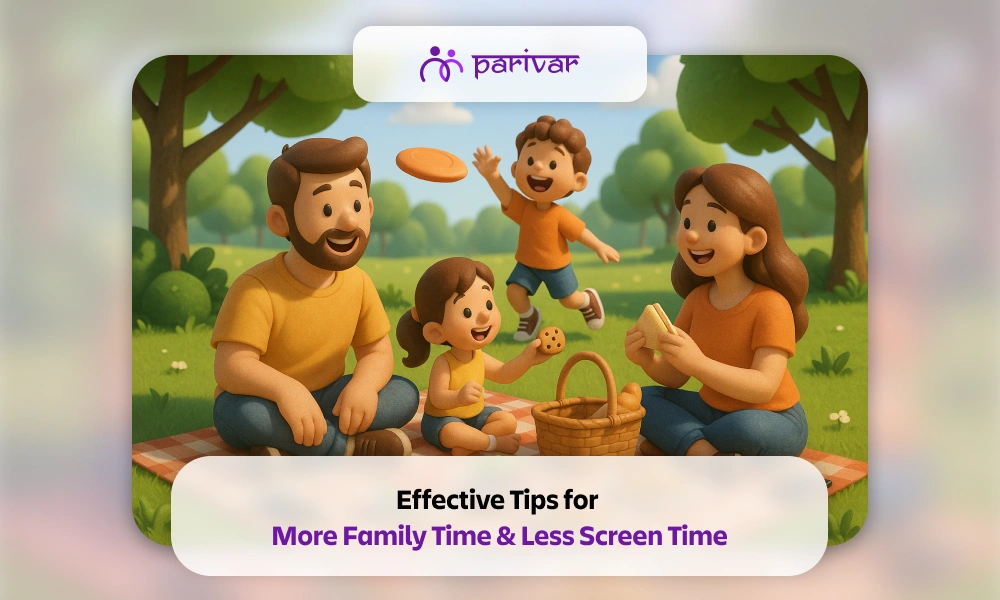
Healthy Screen Habits to Balance Screen Time and Real-Time Connections

  • Kanishka Panchal

  • October 29, 2025 7 min read

TABLE OF CONTENTS

    • 1. Create Tech-Free Spaces
    • 2. Share Screen Experiences
    • 3. Lead by Example
    • 4. Use Technology Thoughtfully
    • 5. Plan for Connection

Introduction

Remember the last time your whole family was in the same room, but each person was absorbed in their own screen? One might be scrolling through social media, another watching a video, and a third playing a game. This scene is common in homes today. Technology offers real value, helping us with work, education, and keeping in touch with those who live far away.

The difficulty arises when screens begin to occupy the space meant for conversation, shared laughter, and simply being present with one another. This is not about declaring technology the enemy. It is about making a conscious effort to enjoy its benefits while still protecting the irreplaceable warmth of family and community life. Finding a balance between screens and real-life interactions can help families grow closer and strengthen community bonds.

The Value of Being Truly Present

Why is balancing screen time with face-to-face interaction so important? The reasons are rooted in our fundamental human needs. The need for connection is met through face-to-face interaction in a way that digital communication cannot replicate.

  • For children, regular, screen-free interaction is how they learn to read facial expressions, understand tone of voice, and develop empathy. These are skills built through practice, not through a screen. 
  • For adults and seniors, consistent in-person contact is a powerful remedy for feelings of loneliness and isolation. It provides a sense of being seen and valued.
  • For the entire family or community, these shared moments create a strong foundation of trust and belonging. They build a shared history of inside jokes, stories, and experiences that form your unique identity. 

When screens take priority, we miss the small, meaningful interactions that strengthen our bonds. This can lead to children engaging less with siblings, parents overlooking precious moments, and shared activities like meals losing their significance. Too much screen time often leaves us feeling drained, less focused, and disconnected from those right beside us.

This is precisely why face-to-face interaction is irreplaceable. It is the essential practice for building trust and empathy. Undistracted time together whether cooking, walking, or talking teaches effective communication, problem-solving, and emotional support. These interactions are the foundation for emotional growth and a lasting sense of belonging, especially for children.

Practical Ways to Balance Screen Time

Achieving balance does not require drastic measures. It is about introducing small, consistent habits that encourage connection.

how-to-balance-screen-family-time

1. Create Tech-Free Spaces

Choose specific areas or times in your home where screens are not allowed. The dinner table is an excellent place to start. Bedrooms, especially for children, can also be designated as device-free to promote better sleep. Similarly, set aside certain times of the day, such as during meals or the first hour after everyone comes home, to be fully present with each other.

2. Share Screen Experiences

Not all screen time has to be isolating. The key is to make it a collective experience.

  • Watch a movie or a documentary together and talk about it afterward. 
  • Play a multiplayer game as a family or learn something new online together. 
  • When you video call relatives, do it on a shared device in the living room so everyone can join the conversation, transforming a one-on-one call into a family event.

3. Lead by Example

Children learn more from what we do than what we say. 

  • Make a conscious effort to put your phone away when a family member is speaking to you. 
  • Talk openly with your children about your own attempts to manage screen time. 

When it becomes a shared family goal instead of a rule imposed only on the young, everyone is more likely to participate willingly.

4. Use Technology Thoughtfully

Use reminders, screen-time trackers, or apps that encourage healthy device use. The goal is not to avoid screens completely, but to make sure they don’t interfere with family life.

5. Plan for Connection

In our busy lives, meaningful time together often will not happen unless we plan for it. Schedule it. A weekly family walk, a Saturday morning breakfast where everyone helps cook, or a monthly board game night can become anchors that everyone looks forward to. For your wider community, this could be a regular potluck dinner or a book club.

Using Parivar to Support Your Goals

You might wonder how an app can help reduce screen time. The purpose of Parivar is different from platforms designed for endless browsing. Parivar app is built with a single goal: to make real-world connection easier for families and communities.

Parivar acts as a central place for your community to coordinate, share, and strengthen the networks of support that are essential for a fulfilling life. It is designed to facilitate the very in-person connections we are striving to protect. 

The Parivar app is available for download on both iOS or Android, making it easy for everyone in your family and community to get started.

The Reward of Small Changes for Family

Finding a healthy balance with technology is a continuous process, not a finish line you cross. There will be days that are better than others. The objective is not perfection, but awareness and gradual improvement.

Begin with one small change. These small steps, repeated consistently, build a culture of connection within your home.

The most meaningful parts of our lives happen in the time we spend fully present with one another. Let us use technology as a tool to support those moments, not to distract us from them.

What is one change your family will try this week? Share your plan in your Parivar family group to inspire others.


TABLE OF CONTENTS

    • 1. Create Tech-Free Spaces
    • 2. Share Screen Experiences
    • 3. Lead by Example
    • 4. Use Technology Thoughtfully
    • 5. Plan for Connection

ABOUT

Parivar - Bringing all community members together at your fingertips, the community engagement app will let you connect with your community conveniently.

Frequently Asked Questions

How much screen time is healthy for children and adults?

For children, experts suggest 1-2 hours of recreational screen time per day, while adults should aim to limit non-essential screen use and prioritize real-world interactions.

Excessive screen use can reduce family interaction, affect communication skills, and impact mental well-being, leading to stress, fatigue, or disconnection.

Set specific tech-free times or zones, such as during meals or before bedtime. Encourage shared offline activities like walks, games, or storytelling.

Face-to-face interactions help children develop social skills, empathy, and emotional intelligence, and create lasting memories with family and friends.

Instead of imposing strict rules, try to engage them collaboratively. Lead by example with your own habits and have an open conversation about digital wellness, framing it as a shared family goal for better connection rather than a punishment.

Start by being mindful of your habits. Designate specific times to check your phone. Use "DND" mode during focused family time, and avoid the first and last moments of your day being screen-focused.

Yes. Shared activities like watching educational content, playing interactive games, or learning together online can strengthen family bonds when balanced with offline time.

Community programs, local events, volunteering, and family clubs provide opportunities for offline engagement and help strengthen connections beyond home.

  • Create tech-free zones and times. 
  • Schedule shared offline activities. 
  • Involve children in screen rules. 
  • Use technology thoughtfully, not excessively.

Recent Blogs

View all
community-engagement-with-polls

5 Ways Polls Drive Real Community Engagement

Every community whether it’s a housing society, a similar-interest group, or a local club faces the same challenge: there may be hundreds of members, but only a few speak up. Most discussions turn into long chat threads, a small group dominates the conversation, and important decisions get delayed because no one really knows what everyone thinks. In a thriving community, every voice should matter. That’s why we created the Poll feature on Parivar. It’s a simple way to break the silence, reach quieter members, and turn passive observers into active participants. Parivar makes it easier for every member to be part of decisions that affect them, and the Poll feature plays a big role in helping communities stay connected and move forward together. Here are five ways Parivar Polls help bring people closer and make community interactions smoother and more meaningful. Why Polls Make Community Decisions Easier and More Inclusive Polls make it easy for everyone to share their preference, giving the group a clear and fair way to decide together, as explained in our guide to the polling feature. 1. Every voice gets a chance to be heard In most groups, only a handful of people speak up regularly. Everyone else stays silent, sometimes because they’re busy, and sometimes because they don’t want to get into long discussions. Polls give these quieter members a simple, pressure-free way to join the conversation. With one quick vote, they can express what they feel without typing a long message or joining a debate. This brings in opinions that are usually missing and gives the group a more complete understanding of what people truly want. 2. Decisions happen faster and with less confusion When decisions are made in chat, messages get buried, discussions go off-track, and the final outcome becomes unclear. Polls cut through all that noise. Everyone gets the same question, the same options, and the same space to respond. The group doesn’t have to scroll through dozens of replies to understand the majority view. This helps communities avoid confusion and reach decisions without unnecessary delays. 3. The process becomes more open and reduces disagreements Communities work best when people feel included. When the final decision is based on clear responses from everyone, there’s less room for misunderstandings or assumptions. Members know the outcome reflects the group’s preference, not one person’s opinion. This builds trust and reduces the friction that often comes with group decisions. 4. Interactions become more regular and enjoyable A community space shouldn’t be active only when there’s a task or a problem. Polls can help spark small, simple interactions that bring people closer like choosing a theme for a monthly activity, picking the next book for a reading club, or deciding the menu for a weekend gathering. These light, everyday decisions help members engage more often and make the group feel warm and welcoming. 5. Admins understand the community better Admins often struggle to guess what the group wants. Polls give them a clearer sense of the group’s preferences: what timings suit most people, which activities are popular, and how interested members are in certain decisions. Over time, these patterns help admins plan better and create experiences that truly match what members are looking for. When people see that their input shapes the group’s direction, they feel more connected and more willing to participate in the future. Examples of How Communities Use Parivar Polls Here are a few simple ways different groups are using polls: Housing societies narrowing down ideas for common-area improvements Families deciding which monthly expenses to prioritize Clubs selecting themes for meetups Committees reviewing options for community-drive activities Resident groups gathering opinions on local vendors or service providers These everyday actions become far simpler when everyone can contribute without overthinking. Tips to Get the Most Out of Parivar Polls A few small steps can make your polls more effective: Keep the question clear and short. Provide options that are easy to compare. Set a reasonable deadline so everyone gets time to respond. Share results with the group for clarity. Use polls consistently so members know their input matters. Add a short note explaining why you’re asking, it increases participation When Everyone Participates, the Community Grows Stronger When everyone’s opinion is valued, communities become more connected and resilient. Parivar Polls help create that environment by giving everyone a simple way to participate and stay involved. Whether the decision is big or small, the act of including everyone makes the group feel more united. If your community wants clearer decisions and better participation, starting with a simple poll can make a bigger difference than you might expect. If your group hasn’t tried it yet, you can download Parivar on iOS or Android and start using polls to hear from every member.

  • Kanishka Panchal
How to Stay Connected with Extended Family

How to Stay Connected with Extended Family & Manage Communication

Staying connected in a large or joint family may seem simple from the outside. There are many people, close relationships, and plenty of reasons to talk every day. But in reality, keeping everyone updated and managing communication across a big family becomes complicated very quickly. Messages get missed, different versions of the same information start circulating, and even small decisions turn into long conversations. Someone says they didn’t know about a plan, someone else feels left out, and the same pattern continues. Most families experience this. And as families grow, the need for a clear and simple way to stay connected becomes even more important. Why Staying Connected Becomes Difficult in Large Families In a small family, communication is usually easy. But in a big family, staying in touch comes with its own challenges: 1. Different Age Groups Grandparents, parents, young adults, and children all prefer different ways of communicating. A tool that one group finds easy might feel confusing or overwhelming for another. 2. Too Many Chat Groups Most families use WhatsApp groups to stay connected. Over time, these groups multiply: one for cousins, one for elders, one for a festival, one for a trip, and more. Important updates get lost in endless messages, photos, and forwarded content. 3. Unclear Responsibilities During festivals, gatherings, or family events, no one is fully sure who is handling what. This leads to confusion and last-minute stress. 4. Private Conversations Mixed with Public Ones Sometimes a message is meant only for a few people, but it ends up in the main group. This creates unnecessary discussions or misunderstandings. 5. Information gets Diluted When updates are forwarded from person to person, each version may change slightly. This leads to confusion about what the final decision actually is. All of this makes staying connected with extended family feel tiring instead of easy. But the good news is that small changes in how a family connects can make a big difference. Why Usual Ways of Staying Connected Don’t Work Well Phone calls, individual messages, and large chat groups work only up to a point. Phone calls take time and rarely fit everyone’s schedule.  WhatsApp groups move quickly, but important messages disappear between birthday wishes, greetings, and forwarded videos. There is no single place where family announcements, event details, and responsibilities stay organized. Without that, information drifts and people get confused. Large families don’t need complicated tools, only a simple, organized way to stay connected without overwhelming anyone. What Large Families Need to Stay Connected Without Confusion To keep communication smooth, large families benefit from: A common space where updates stay clear Smaller groups for specific conversations A simple way to plan events and track responsibilities Reminders for important dates or tasks Privacy controls for sensitive discussions An easy interface that even elders can use comfortably These basic needs make it easier for families to share information and feel connected. How Parivar App Helps Large Extended Families Stay Connected Parivar App is built with Indian families and communities in mind. It understands how families plan, discuss, and share updates. Here’s how it helps large or joint families stay connected more easily: 1. Family Groups & Sub-Groups Instead of dozens of chat groups, families can create clean and organized spaces: cousins group, event group, elders group, and more. Only the right members receive the right messages. 2. Events & Activities Whether it’s a pooja, festival preparation, family trip, or community workshop, everything can be planned in one place. Dates, venue, and reminders stay organized. 3. Shared Responsibilities Families can assign tasks like food arrangements, travel coordination, guest hosting, decorations, or bookings. Everyone can see who is doing what, reducing stress during events. 4. Privacy Controls Not every message is meant for everyone. Parivar App allows families to create groups and roles so discussions stay within the right circle. Benefits Families Notice Almost Immediately Fewer misunderstandings Less stress while planning events Everyone gets the same information Tasks are completed on time Elders feel included Family bonds grow stronger Good communication helps families avoid confusion and spend more time enjoying moments together. A Small Change that Connects the Extended Family Large families are built on shared memories, support, and traditions. But without clear communication, even simple activities become stressful. By organizing how information flows, families save time, reduce confusion, and stay more connected. Parivar App makes this easier by giving families a simple place where everything stays clear and accessible. If your family or community often faces challenges, using a structured tool like Parivar App can make everyday coordination smoother and help everyone stay connected in a more meaningful way. Parivar App is available on both iOS and Android. Download it and bring your extended family closer with just a few taps.

  • Kanishka Panchal
sense-of-belonging-in-communities

The Sense of Belonging: What Makes People Stay in a Community

Sometimes we join a community because someone invited us. Sometimes we join out of curiosity. But the reason we stay is almost always the same: we feel like we belong. Belonging is not a big idea or a fancy concept. It’s a very normal, everyday feeling: “These are my people. I’m comfortable here.” That’s it. And yet, this one simple feeling decides whether a community grows, becomes silent, or slowly fades away. In this blog, let’s talk about what creates that feeling of belonging, and how community leaders whether running a family group, a society, or a hobby circle can build it naturally. What Sense of Belonging Really Feels Like in a Community Belonging is not about how many members a group has. It’s about how people feel when they show up. Do they feel noticed? Do they feel respected? Do they feel connected to others? Do they feel safe sharing something? If the answer is yes, people participate. If not, they quietly step back. Why People Stay in a Community: The Reasons Behind It 1. Feeling Seen Everyone likes to feel noticed, even in small ways. A birthday wish, a simple “thank you,” or calling someone by their name builds warmth. It tells people: you matter here. 2. Shared Moments Communities grow stronger through moments like festivals, events, achievements, photos, inside jokes. These shared experiences slowly become memories that connect everyone. 3. Familiarity The more often people interact, the more comfortable they feel. Even small routines such as a weekly message, a quick poll, a reminder help people feel at home. 4. Feeling Safe People speak freely only when they feel safe. Clear rules, respectful behavior, and fair admins create an environment where even shy members feel comfortable joining in. 5. Being Able to Contribute People enjoy helping. When someone feels they can contribute, share information, teach something, or even manage an event, they feel valued. What Weakens Belonging in Communities Communities don’t break suddenly. They weaken slowly through small things: A few people dominating every conversation Conflicts not handled early Members feeling ignored Too many messages or no messages at all No clear structure or roles Once belonging drops, participation drops with it. How to Create a Sense of Belonging in Community 1. Give a Warm Welcome A simple welcome message to new members goes a long way. Introduce them, ask them to share something about themselves, help them feel at ease. 2. Celebrate People Highlight small achievements, birthdays, contributions, or even good suggestions. People naturally stay where they feel appreciated. 3. Keep Consistent Routines Communities feel alive when there’s a rhythm. It can be as simple as: Monday updates Weekend event reminders Monthly polls Festival plans Small habits create a sense of togetherness. 4. Make Space for Everyone Encourage quieter members to participate too. Ask open questions, invite opinions, or share a friendly prompt. 5. Handle Issues Calmly Conflicts happen. What matters is how they’re managed: with fairness, calmness, and respect. This builds trust in the long run. How Parivar Helps Build Belonging Parivar is built for communities that want to stay close, connected, and organized. Here’s how it helps: Activities & events help bring people together. Polls let everyone have a voice. Photos and albums keep memories alive. Roles and permissions make management easier and more transparent. Announcements and reminders keep everyone in the loop.  Parivar makes it easier to build that warm, “we are together” feeling. A Community Grows When People Feel They Belong Communities don’t need perfection. They need care, patience, and a genuine effort to include everyone. When people feel accepted and valued, they don’t just stay, they show up, participate, and help the community grow naturally. If you want to bring your community closer in a simple, organized way, you can download the Parivar App on: 👉 iOS 👉 Android 

  • Kanishka Panchal